 Starter motor & alternator specialist
 Truck and van parts
 New parts with a 2-year warranty

 Contact an expert


MAN and Munich operator MVG announced a new phase of the MINGA project, with autonomous bus trips open to registered users from 17 November until June 2027. It remains a defined trial with its own scope.
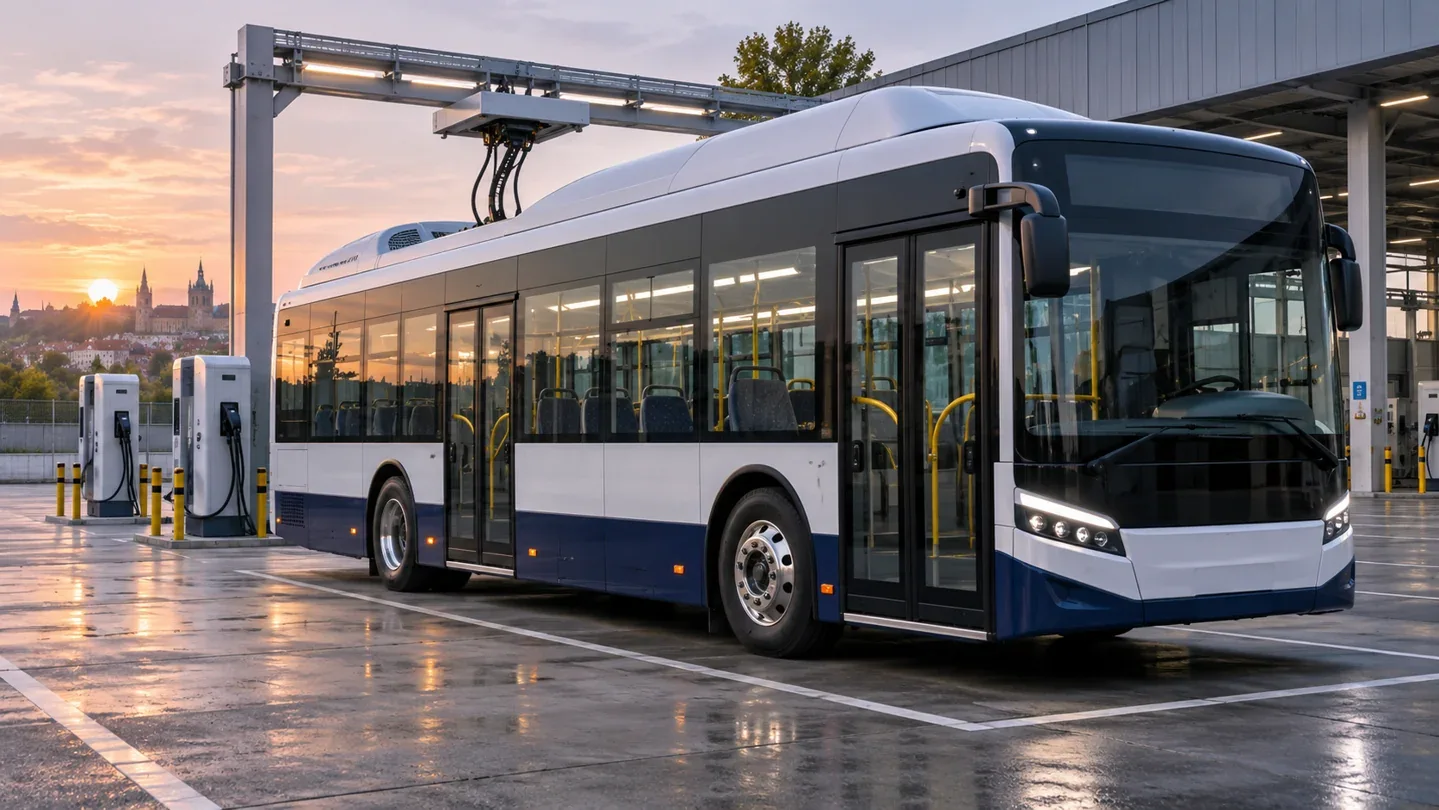
MAN and Munich operator MVG announced a new phase of the MINGA project, with autonomous bus trips open to registered users. This step brings technical development closer to real-world use. It remains a defined trial with its own scope and timetable.
Key points
- 3 November: user phase announced.
- 17 November: announced start of trial trips.
- June 2027: planned end of this phase.
Trials announced on a specific route
The announcement of 3 November plans trips with users from 17 November, for a phase running until June 2027. The programme involves a MAN Lion’s City 12 E on part of route 178 in Munich, between the Petuelring and Freimanner Hölzl areas.
More than two thousand people had pre-registered within the framework presented. This level of interest does not turn the trial into a general autonomous service. Operation, access and conditions remain those of the trial and must not be extended to the whole network.
A bus must do more than move
Public transport includes stops, boarding and alighting, connections and passengers’ varied needs. The quality of a system is therefore also measured by how it fits into this journey. Technically successful driving is not enough if information or access remains hard to understand.
Regularity plays a central role. Passengers must be able to anticipate the service and know how their trip will go. Trials with users make it possible to observe situations that purely technical tests do not always reproduce in the same way.
The urban environment multiplies special cases
Roadworks, obstructive parking, dense traffic and unexpected behaviour can change the route. An automation programme must specify how these situations are handled within its operating domain. The announced scope is therefore essential information, not a minor detail.
To follow the project, the most instructive elements will be the real operating conditions and the difficulties encountered. The number of trips completed does not explain everything. The ability to maintain understandable operation and manage the system’s limits matters just as much.
A new need for technical coordination
An automated electric bus combines several fields: drivetrain, on-board equipment, perception and software. Maintenance must respect this consistency. Changing one element may require checks that go beyond how it works in isolation.
For operators, this reinforces the value of an up-to-date technical file and clear coordination between those involved. Vehicles must remain identifiable in their exact configuration. Automation does not remove maintenance; it adds relationships between systems that must be understood and monitored. See also Mercedes-Benz prepares the next eCitaro, SPIRIT-E bidirectional charging and five Euro NCAP stars for the MAN TGL.
Frequently asked questions
Does this trial mean every MAN bus can drive itself?
No. The project concerns one equipped vehicle and a specific test area. A demonstrator’s capabilities do not automatically apply to vehicles already in service. Any extension must be announced and approved for the conditions concerned.
Find the right part
AutoTruck42, a French company based in the Loire, supplies parts for trucks, buses and HGVs, including starter motors and alternators with a 2-year warranty:
Send us the OEM part number or your vehicle details: we check compatibility before dispatch.
Browse our catalogue of car and truck parts.