 Starter motor & alternator specialist
 Truck and van parts
 New parts with a 2-year warranty

 Contact an expert


The SPIRIT-E research project presented results on bidirectional charging for heavy trucks. MAN and its partners studied several energy exchanges using an eTGX – a research result, not yet a commercial service.
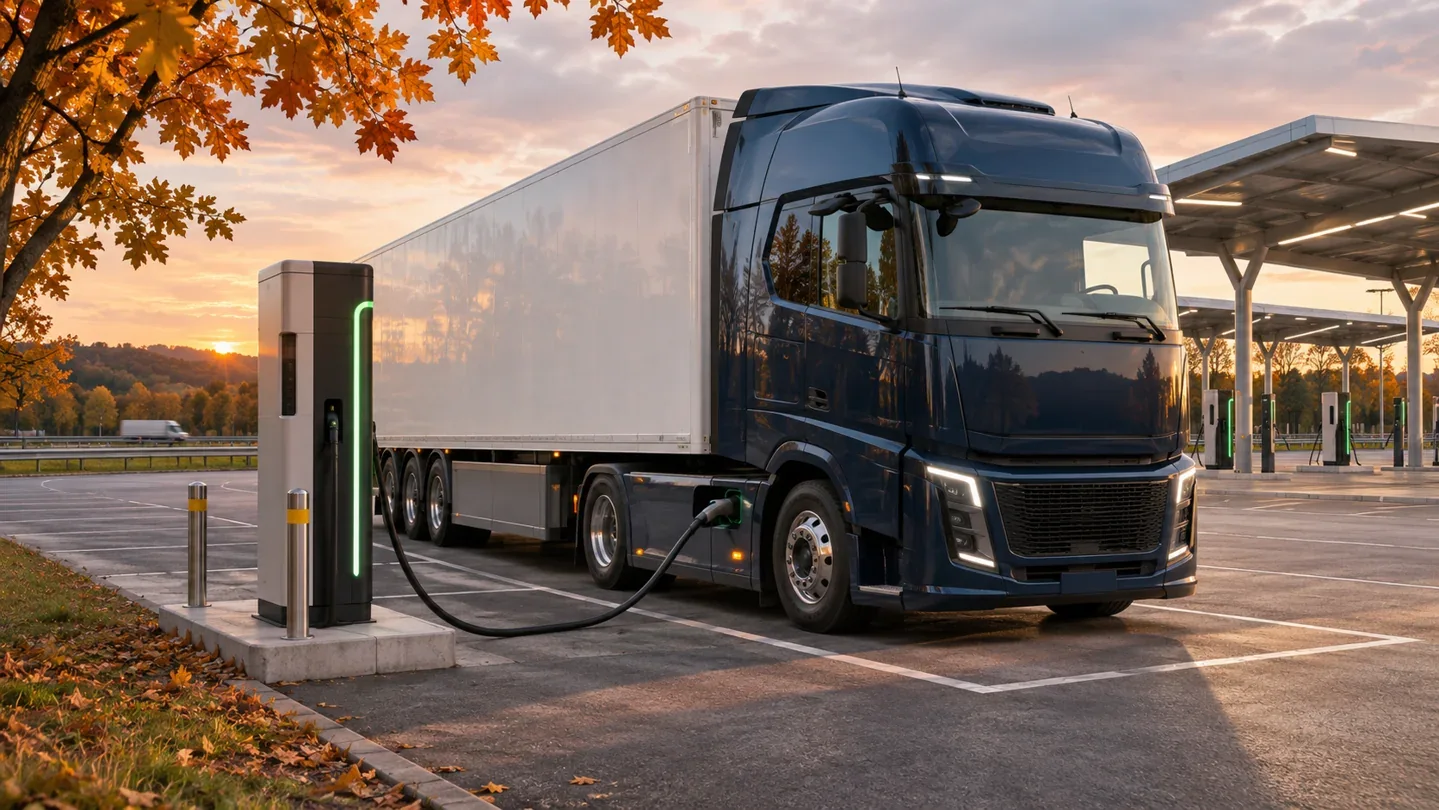
The SPIRIT-E research project presented results on bidirectional charging for heavy trucks. MAN and its partners studied several energy exchanges using an eTGX. This could give parked vehicles an additional role, but it must be distinguished from a commercial service available to every fleet.
Key points
- 30 October: project results presented.
- 480 kWh: battery of the demonstration truck.
- 350 kW: discharge power demonstrated up to this level.
A demonstrator for several energy uses
The review presented on 30 October concludes a three-year research programme involving eight partners. The truck used has a 480 kWh battery and demonstrated discharge of up to 350 kW. The work covers exchanges with another vehicle, a site and the grid.
These results describe an experiment. They do not allow any electric truck to be freely connected to an existing installation. The vehicle, equipment and control systems must be compatible and approved for the intended use.
The depot becomes a coordination point
An electric fleet sometimes concentrates several vehicles and a large amount of energy on one site. Energy management can try to organise exchanges according to the depot’s needs. But trucks first have a transport job to do: their available energy cannot be treated as permanent.
The operations manager must therefore define a reserve and a schedule. A vehicle that leaves early, gets an extra job or returns later than planned changes the balance. Organisational flexibility matters as much as the theoretical capacity of the batteries.
Three uses not to be confused
An exchange between vehicles may meet a different need from powering site equipment. Interacting with the grid adds further operating and service conditions. Each scenario requires the need, limits and equipment to be specified.
It would be premature to assume a single saving for every depot. Schedules, tariffs, available power and installation costs vary. A useful study must compare the scenario with and without bidirectional charging while keeping the same transport requirements.
Keeping things simple for drivers
An energy system can be technically sophisticated while remaining simple to use. The driver must know which vehicle is ready, what reserve is available and how to report a change of job. Ambiguous information at departure can cancel out the benefits of overnight optimisation.
The SPIRIT-E trials therefore open an interesting path for future operations. The next question will be integration: commercial terms, equipment compatibility, battery monitoring and daily organisation. Success will depend on making these functions useful without complicating the main job. See also Hylane orders twenty more MAN eTGX, MAN on long-distance electric trucks and four HGV charging stations on the A7.
Frequently asked questions
Can a truck with a large battery power a depot directly?
No. Storage capacity is not enough. Bidirectional functions must be designed in, the installation must be suitable and control must match the use. The research project is not permission for an improvised connection.
Find the right part
AutoTruck42, a French company based in the Loire, supplies parts for trucks and HGVs, including starter motors and alternators with a 2-year warranty:
Send us the OEM part number or your vehicle details: we check compatibility before dispatch.
Further reading
- Renault Pro+ prepares the 2026 Mayors’ Fair with its electric vans
- Electric trucks and total cost: a Daimler survey revives the comparison with diesel
- MAN grows over the first nine months of 2026: trucks, vans and electric on the move
- Scania looks back at Twin SCR: understanding truck emissions after-treatment
Browse our catalogue of car and truck parts.