 Starter motor & alternator specialist
 Truck and van parts
 New parts with a 2-year warranty

 Contact an expert


On 29 October Daimler Truck presented a survey on how fleets perceive the economics of electric trucks. Over 40% see them as cheaper than diesel on total cost, but the survey is not representative.
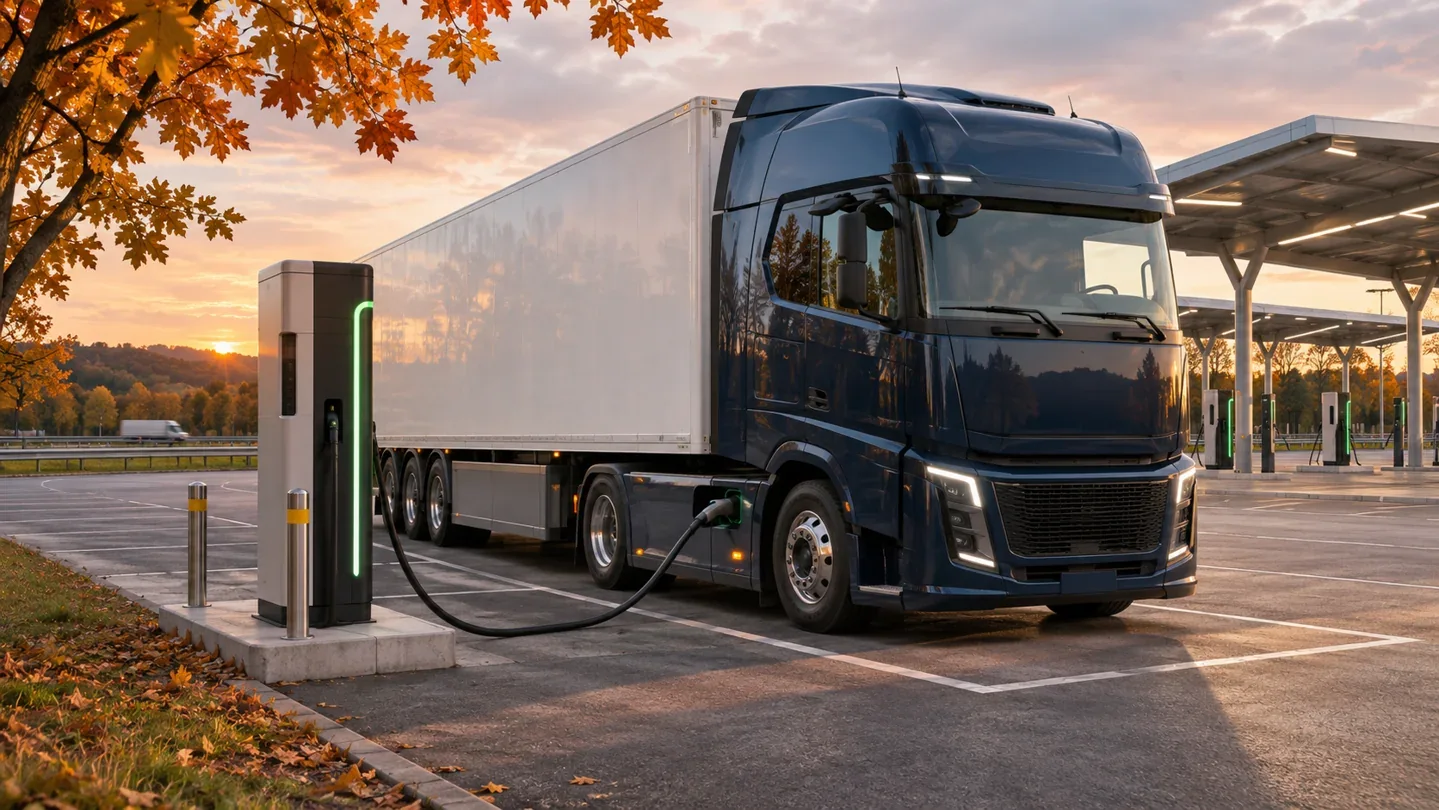
On 29 October Daimler Truck presented a survey on how the economics of electric trucks are perceived. More than 40% of respondents consider them more cost-effective than diesel in total cost of ownership. This result opens a useful discussion, provided it is not turned into a rule for every business.
Key points
- About 200: fleet decision-makers surveyed.
- 3 countries: Germany, France and the UK.
- Non-representative survey: perceptions not to be generalised.
Opinions gathered in three markets
The survey was carried out among about two hundred fleet decision-makers in Germany, France and the United Kingdom. It is explicitly non-representative. About 16% of respondents place the two technologies at a comparable level, while some still see an economic advantage in diesel.
These are the perceptions and situations of the businesses surveyed, not a universal comparative test. Each respondent’s context, duties and rates can influence their view. The announcement should therefore help ask the right questions rather than deliver an automatic verdict.
Total cost starts with the duty cycle
A truck is not compared only on purchase price. Mileage, payload, holding period, energy, maintenance and availability all contribute to the result. The ability to charge at the depot or en route can change the scenario considerably.
A business should start from its own data: routes, consumption, waiting times and observed costs. If some information is missing, it is better to measure it over a representative period than to use a general average. A precise calculation on a real duty is worth more than a spectacular percentage without context.
Don’t forget infrastructure and organisation
The cost of charging can include building work, a grid connection, equipment and services. It is also necessary to look at how vehicles follow one another at the available points. An under-used charger and a saturated installation pose different problems.
Planning matters as much as equipment. Charging that fits a stop already scheduled can be easy to integrate; a detour or extra wait can reduce the economic benefit. The calculation must therefore include productive working hours and the margin needed to meet customer commitments.
Test several scenarios rather than a single result
An investment case benefits from comparing a central scenario, a favourable one and a more constrained one. Varying mileage, a change in energy tariff or temporary unavailability of a charger shows what weakens the business model.
This approach avoids making the decision depend on a single assumption. The Daimler survey shows that operators already perceive a benefit, but the conclusion for another business must come from its own constraints. The most relevant technology is the one that stays consistent when the day does not go exactly to plan. See also four HGV charging stations on the A7 for 2027, Hylane orders twenty more MAN eTGX and LOGISTEED adds ten Actros to its fleet.
Frequently asked questions
Is electric always cheaper than diesel?
No. The result depends on the duty, financing, energy and infrastructure. A perception survey does not replace a total cost calculation tailored to the fleet. A representative trial and several scenarios allow a sounder decision.
Find the right part
AutoTruck42, a French company based in the Loire, supplies parts for trucks and HGVs, including starter motors and alternators with a 2-year warranty:
Send us the OEM part number or your vehicle details: we check compatibility before dispatch.
Further reading
Browse our catalogue of car and truck parts.