OEM quality 2-year warranty
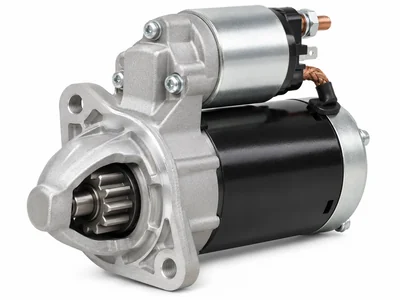
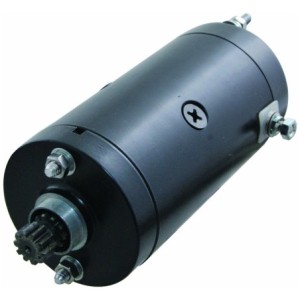
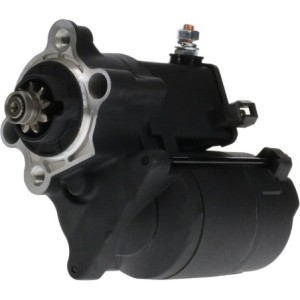
Starter Harley Davidson 1.4 kw Remplace 400517092, 280007300, 280007301
€177.90 TTC €148.25 HT
 Starter motor & alternator specialist
 Truck and van parts
 New parts with a 2-year warranty
 Website and company100% French
 Contact an expert

Your basket is empty.
Find your parts in our categories or search for a part number.
For a motorcycle starter, record the engine type, model year and number stamped on the starter. Engine capacity or make alone does not determine fitment.
On a motorcycle, the space available around the engine and gearbox makes the shape of the starter motor particularly important. Note the exact model and its generation before searching by engine displacement. Two motorcycles from the same brand may use different starter architectures. For an older or modified machine, the part number of the component currently installed may prove more useful than the initial year of registration.
A catalog entry might cover, for example, BMW R850, R1100, R1150, and R1200C models. It specifies 12 V, 1.1 kW, nine teeth, and references Valeo D6RA75 and D6RA55. This list applies only to the specific entry in question; it does not imply that the part is compatible with every BMW motorcycle whose name begins with "R" or which has a similar engine displacement.
On a small engine, the length of the starter body and the orientation of the terminal can be just as critical as the mounting points. A part might look identical to the old unit when viewed from the front, yet occupy more space behind the mounting flange.
The registration year and vehicle model name are not always sufficient to distinguish between two different engines or two iterations within the same generation. Include the engine code, body type, and—if available—the production date found in the vehicle documentation.
Whether a rotation is clockwise or counter-clockwise depends on the side from which the component is viewed. When comparing two drawings, maintain the convention used by the manufacturer—for example, the pinion side. The apparent direction will be reversed if a photograph was taken from the opposite end.