 Starter motor & alternator specialist
 Truck and van parts
 New parts with a 2-year warranty

 Contact an expert


Tobias Wagner’s world tour in a Mercedes-Benz eActros 600 has completed its first leg: about 3,500 km from Hanover to Turkey in a truck converted into an expedition camper.
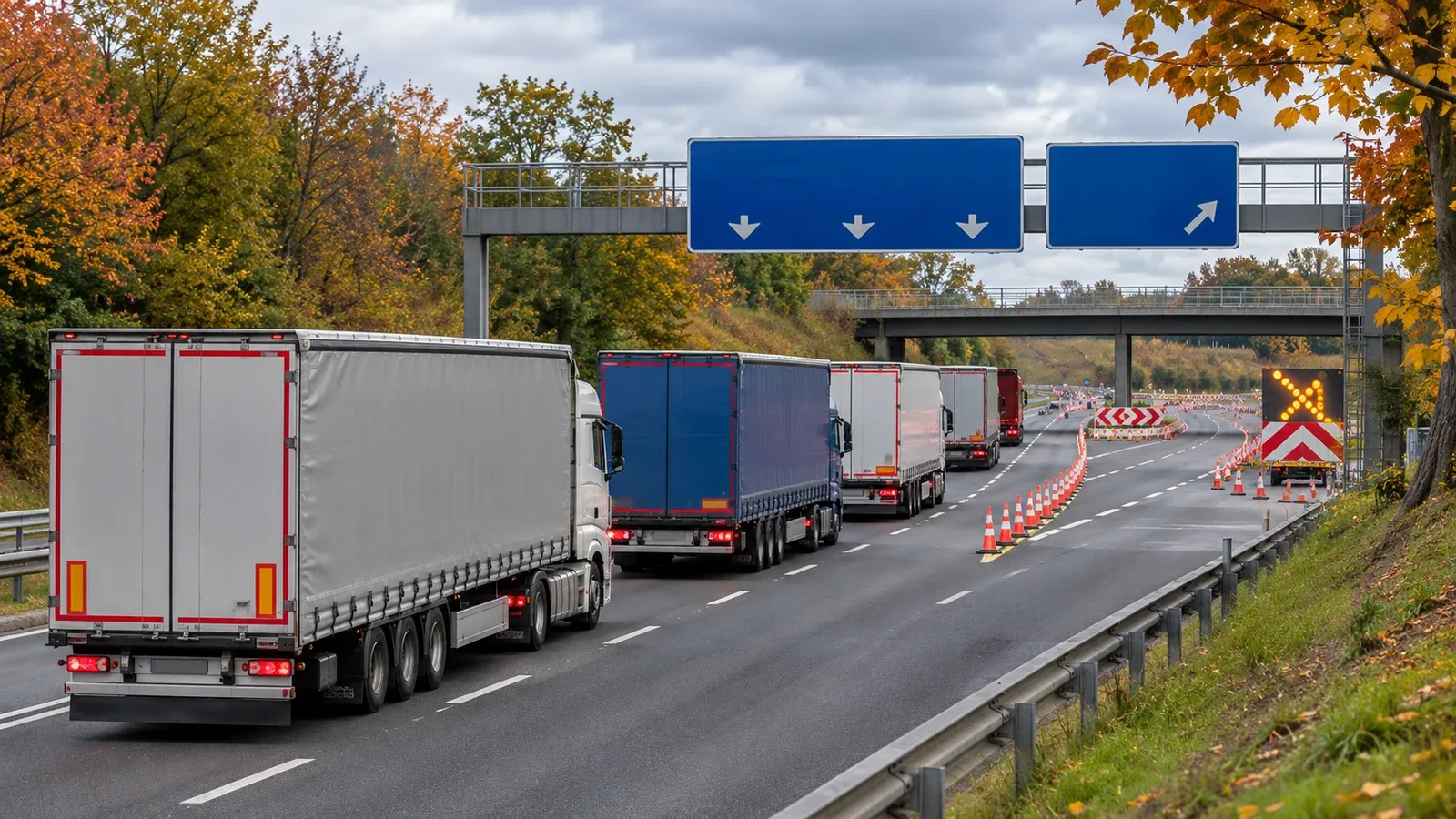
Tobias Wagner’s world tour project in a Mercedes-Benz eActros 600 has passed a first milestone. The review presented on 22 October describes a European route to Turkey with a vehicle converted into an expedition camper. This particular configuration must stay at the centre of any reading of the announced figures.
Key points
- 22 October: review of the first leg.
- About 3,500 km: distance covered to Turkey.
- Converted vehicle: a use distinct from loaded haulage.
An expedition still under way
Having left Hanover on 20 September, the vehicle covered about 3,500 kilometres to the Aksaray plant in Turkey, with three charging stops announced on this first leg. The full project aims for about 45,000 kilometres, more than thirty countries and at most eighty charges over roughly a year.
These targets are not yet a final result. The truck has been converted for the expedition and does not represent a loaded combination in commercial operation. Weight, bodywork, pace and conditions of use may differ greatly from a haulage round.
An adventure that tests the infrastructure
On an international route, a large energy reserve does not answer every question. You must be able to physically reach the station, use compatible equipment and organise the stop. Available space and vehicle configuration can become as important as the displayed power.
Crossing from one territory to another adds differences in network, payment and availability. Serious preparation must therefore plan several options. The interest of such an expedition lies less in demonstrating a universal figure than in exposing the vehicle to a variety of situations.
What a haulier can take from it
A company should not directly use the performance of an electric camper to plan a loaded round. It can, however, adopt the preparation method: map the options, check access and identify the points where a back-up solution becomes necessary.
The comparison must concern a configuration representative of real work. Load, speed, terrain, trailer and auxiliary equipment all affect energy needs. A trial on a usual job provides a more useful basis than extrapolating from an expedition route. See also MAN’s long-distance electric truck and four HGV charging stations on the A7.
Feedback is valuable for its details
A travel review becomes instructive when it describes the conditions: state of charge at departure, energy recovered, stopping time and difficulties encountered. Without these, a number of kilometres per charge can be misinterpreted. Averages do not always reveal the most demanding stages.
To follow the rest of the project, adaptations and limits will need to be examined as closely as the successful stages. This gives a more concrete view of heavy electric mobility and avoids turning a one-off expedition into a promise of universal operation. On costs, read electric truck vs diesel: a Daimler survey on total cost.
Frequently asked questions
Do three charges over 3,500 km represent normal range for a loaded truck?
No. The result concerns a converted vehicle and a specific route. It cannot be used to calculate the range of a loaded HGV directly. Operational trials should use a job and configuration comparable to the company’s own.
Find the right part
AutoTruck42, a French company based in the Loire, supplies parts for trucks and HGVs, including starter motors and alternators with a 2-year warranty:
Send us the OEM part number or your vehicle details: we check compatibility before dispatch.
Further reading
Browse our catalogue of car and truck parts.