 Spécialiste démarreurs & alternateurs
 Pièces poids lourds et utilitaires
 Pièces neuves garanties 2 ans

 Contactez un expert


One click does not automatically mean that the starter is HS. Learn to distinguish a weak battery, a connection fault and a starter failure before choosing a compatible part.
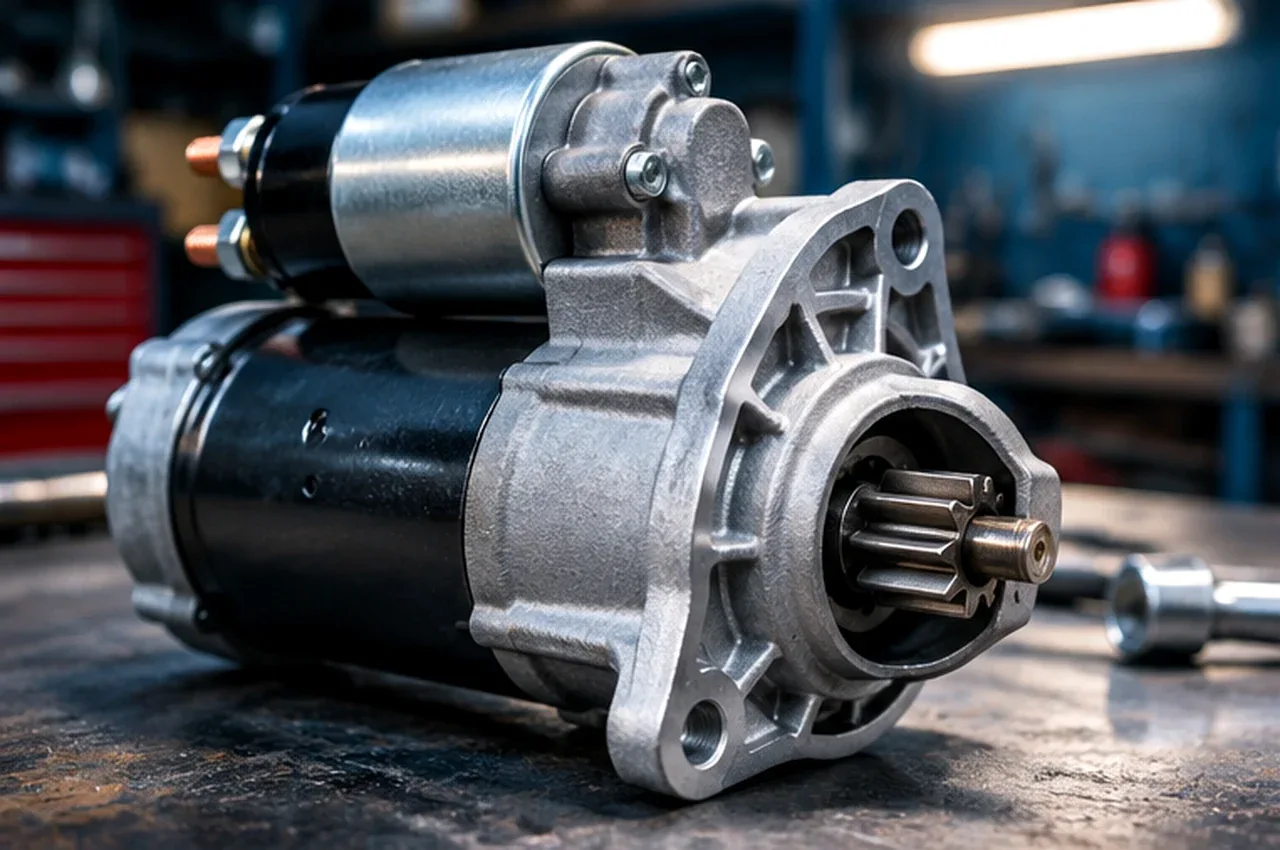
A motor that does not launch, a simple "click" when turning the key or a start of more and more slow: the symptoms of a starter down are known, but their interpretation is often too fast. In many cases, the starter is not the real responsibility. Discharged battery, oxidized ground cable, loose-down terminal or missing electric control can produce exactly the same impression.
This AutarchK42 guide explains how a starter works, how to guide a diagnosis without replacing random parts and what elements check to order the good starter reference. The data values are general benchmarks: the specifications and procedures of the vehicle manufacturer remain priority.
What exactly is the starter ?
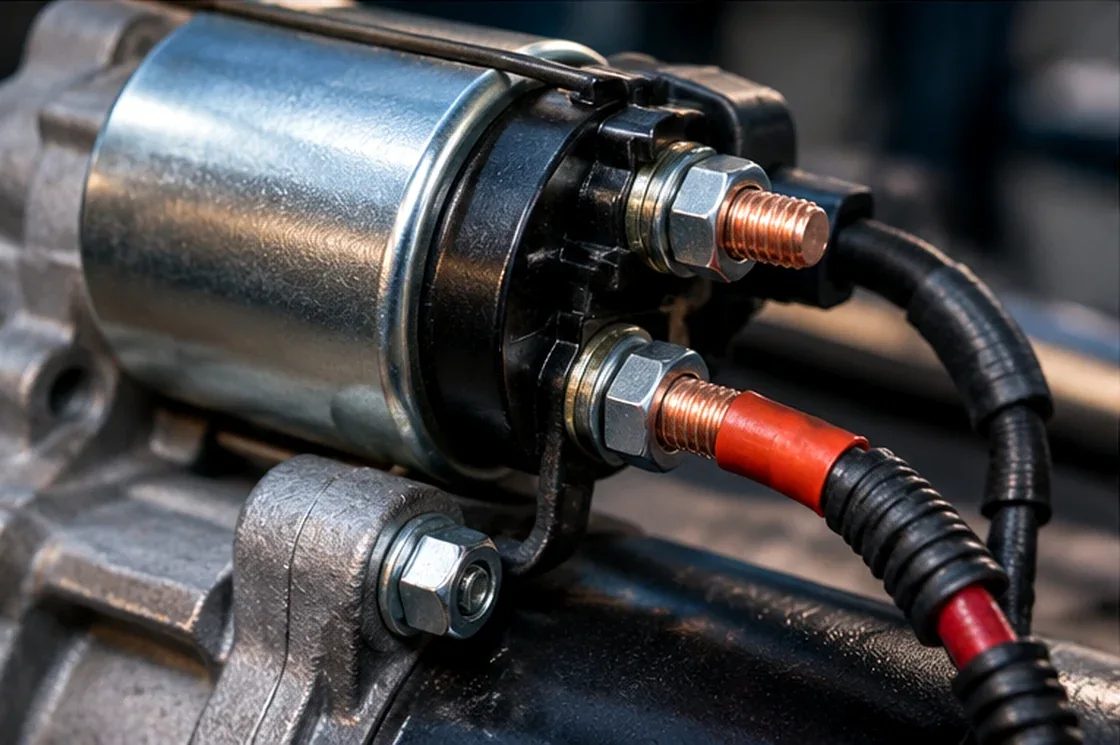
The starter is a high power electric motor, powered by the battery. When startup is allowed, an electromagnetic device — often called solenoid - pushes the pinion to the crown of the flywheel and establishes the power contact. The electric motor then causes the thermal motor until it can work alone.
Once the engine is launched, the mechanism disengages the pinion. On some recent vehicles, the function is suitable for repeated cycles of the STOP & START system; On other architectures, startup assistance can involve an alternate starter. It is therefore necessary to identify the actual mounting before ordering a part.
The 6 symptoms that must attract attention
1. A dry click, but the engine does not turn
The noise may correspond to the actuation of the solenoid without motor workout. The origin can be internal to the starter, but insufficient tension or strong resistance in power connections sometimes gives the same result. A single click never confirms a starter failure.
2. A succession of fast clicks
This repetition often evokes a power supply that collapses during the solicitation: battery too low, poor contact or high resistance in the circuit. Priority is to control the battery and connections before depositing the starter.
3. The engine is slowly launching
Slow rotation may come from a tired starter, an insufficiently charged battery, a degraded ground cable or unusual engine mechanical strength. In very cold weather, the viscosity of the oil can increase the necessary effort to launch.
4. The starter turns in the void
An electric motor can be heard turned without the crankshaft. The problem may relate to the gear mesh, the launcher or the toothed crown. This symptom requires adapted mechanical inspection: insist risk to aggravate the damage.
5. No noise when starting
The total reaction absence may be linked to the control, relay, to a fuse, automatic transmission, immobilizer, contactor or starter itself. A control fault does not adjust by the only replacement of the starter motor.
6. An abnormal metal noise
A grinding or unusual snap can signal a problem of gear, fixing or mechanical wear. It is better to interrupt repeat attempts to avoid damaging the crown from the motor steering wheel.
Diagnosis: start with what is most common
Step 1 — Check the status of the battery
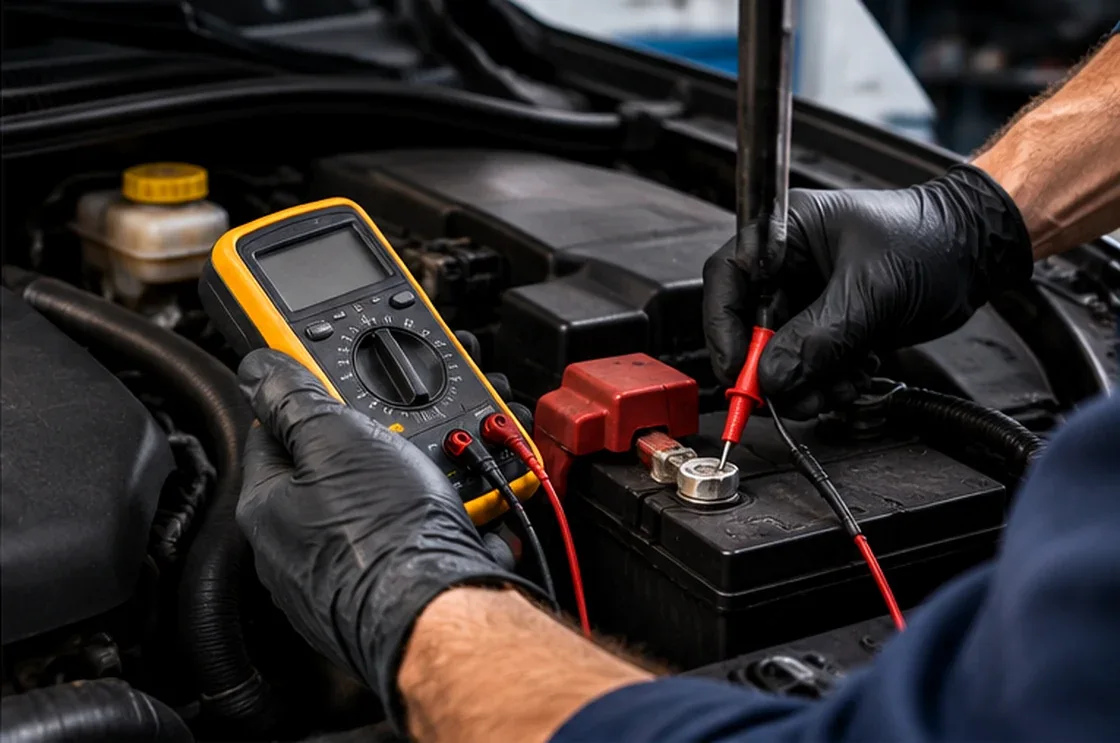
Engine stopped and after stabilization, a properly charged 12V lead battery often has a voltage close to 12.6 V, but that does not only measure its ability to provide an important current. Temperature, battery technology and charge status influence this value. A battery can display a vacuum plausible voltage and collapse when starting: a tested under load is then necessary.
Before concluding, seek discharge due to short trips, prolonged immobilization or abnormal electricity consumer. A low battery does not automatically imply that it must be replaced; It can simply require recharge and complementary controls.
Step 2 — Observe the lugs and the masses
Visually inspect the terminals, cables and accessible connections: corrosion, traces of heating, damaged sheath, loosening or altered motor mass. The starter requires a high intensity; Modest resistance can therefore cause a large voltage drop under load. A professional can measure this fall on the positive and negative circuits during a start attempt, depending on the manufacturer method.
Step 3 — Examine the start command
The position of the box selector, the immobilizer authorization, the presence of a relay, the pedal switch and the management electronics can intervene. Depending on the vehicle, the absence of voltage on the orients control terminal upstream of the circuit rather than to the starter itself. Diagnostic tools may be required to read defects and authorization conditions.
Step 4 — Make the starter failure confirm
If the power supply and the command are compliant, the specialist can check the current call, launch speed, connections, and mechanical status. A bench test is possible on some models. Never circuit the terminals to rotate it : the risks of short circuit, unexpected movement and burning are real.
Practical table: Symptom, tracks and priority
| Symptom | Possible causes | PRIORITY VERIFICATION |
|---|---|---|
| Unique click without workout | Food, solenoid, starter | Battery and voltage drops |
| Repeated fast clicks | Low battery, bad contact | Battery under load, lugs |
| Very slow launch | Battery, Mass, Starter, Engine Effort | State of charge and power circuit |
| Vacuum rotation | Launcher, pinion, crown | Specialized mechanical inspection |
| No noise | Authorization, Relay, Order, Starter | Order circuit and electronic faults |
| Grinding | Bad hawning, mechanical wear | Stop testing and examining mounting |
How to choose the right replacement starter ?
The selection should not be limited to the brand and the commercial model. A vehicle may have known several fixtures according to the engine, the year of production, the gearbox and the equipment. OEM reference listed on the original room or in the technical documentation is an excellent starting point.
Then check, when this information apply to assembly:
- The nominal voltage, usually 12 V on car, but other architectures exist.
- The power, expressed in KW, and the manufacturer's specifications.
- The number of teeth, the type of pinion and the direction of rotation.
- The location of the fasteners, the distance, the centering and the geometry of the nose.
- The position of the electrical terminals and the configuration of the solenoid.
- The engine code, year, wine and potential replacement numbers.
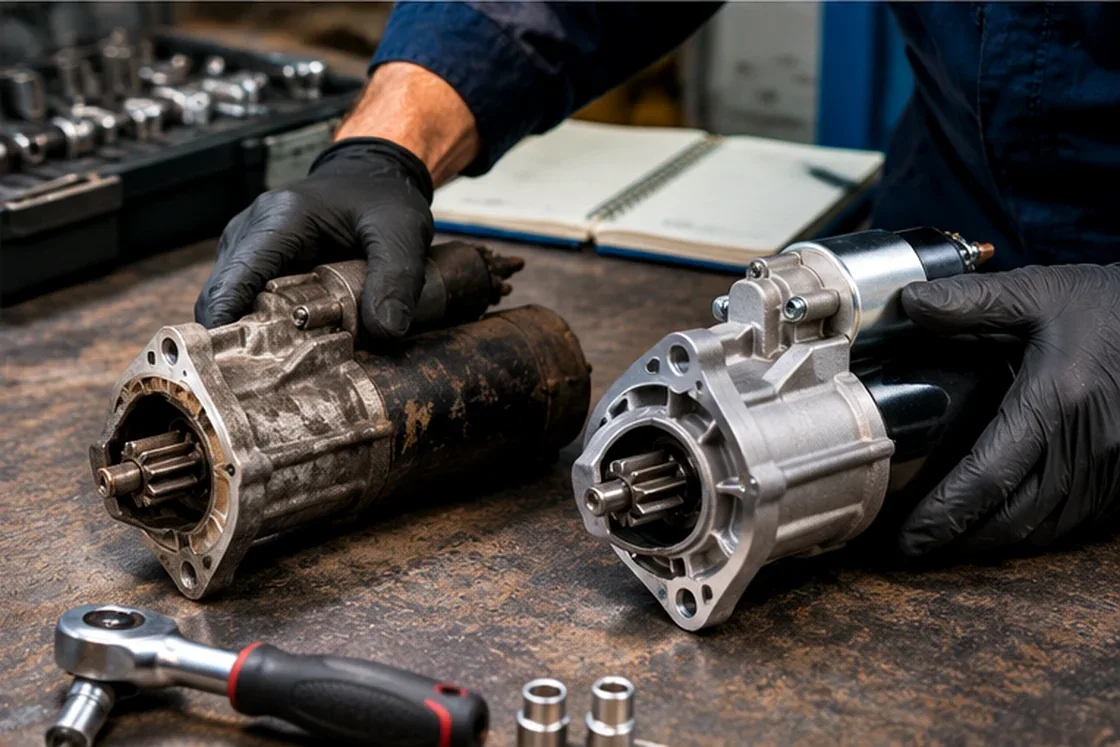
A higher power is not automatically synonymous with compatibility. Similarly, two references that look alike on a photo can have different bindings or workout. Cross-references manufacturer are useful, but the exact application must be verified.
New starter or standard exchange: what to check ?
A new starter is made from new components; A standard exchange unit is reconditioned according to an industrial process defined by its manufacturer. Both solutions may agree if they correspond precisely to the vehicle and whether their provenance is clear. Check the possible presence of a setpoint, the warranty coverage, the contents of the box, and the return conditions before ordering.
It is also relevant to treat the cause of the initial failure. A degraded mass cable, insufficient battery or drive fault may cause new symptoms even after installing a new starter. The part must be mounted with the fixings and clamping torques provided by the manufacturer.
The most frequent errors before replacement
The first is to blame the starter as soon as a vehicle does not start, while the engine is normally driven: in this case, the ignition, the injection or other engine functions may be involved. The second is to choose only on photo, without comparing the references. The third is to insist on the start command despite an abnormal mingling noise.
Last precaution: Before removal, secure the vehicle and observe the power-off builder procedure. Batteries and start-up cables can deliver hazardous currents. If you do not have the necessary tools and skills, entrust the intervention to a professional.
Frequently asked questions about starters
Can we start a car with a HS starter ?
It depends on the actual cause, transmission and equipment. Some old manual cars could sometimes start with pushed, but this practice is not universal, presents risks and may be incompatible with modern vehicles. It does not constitute a recommended troubleshooting method.
Can a starter operate cold and fail to fail ?
Yes I do. Electrical resistances, contact faults or certain mechanical wear can occur differently depending on the temperature. The behavior must be reproduced and measured, rather than deducted from a single test.
Is it the battery or starter that makes "click?" ?
The click can come from the solenoid, a relay or another electric member. Its location and battery condition guide control, but a serious diagnosis is based on measures and the examination of the complete circuit.
Should we raise the wine to buy a starter ?
The wine is very useful, especially when there are several variants of motorization or box. Add if possible a readable photo of the deposited part reference: it facilitates the check for equivalences and reduces control errors.
Why does not a new starter still solve the problem ?
Because the new starter can receive insufficient voltage, do not be controlled or associated with a mechanical problem of the motor. Check the battery, the masses and the startup authorization before purchase avoids unnecessary intervention.
To remember before ordering
The good reflex is to diagnose before replacing. Start with the battery and connections, then check the command, and then confirm the starter fault. For the choice of the room, cross reference OEM, technical characteristics and vehicle information: it is the best way to limit the editing errors.
Technical reference: DENSO — STARTER Troubleshooting, diagnostic guide for a first monitored equipment manufacturer.
Retrouvez notre catalogue de pièces auto et poids lourds.